Understanding the Importance of the 1099-NEC Form
The 1099-NEC form is crucial for businesses that hire independent contractors. It serves as a primary reporting tool for non-employee compensation, ensuring that payments are accurately documented for tax purposes. Understanding its significance helps businesses remain compliant with IRS regulations and avoid potential penalties.
For instance, failing to file the 1099-NEC correctly can lead to fines and complications during tax season. By using the correct form to report payments over $600 to contractors, businesses not only fulfill their obligations but also maintain clear financial records, which is vital for audits and financial planning.
Key Differences Between 1099-NEC and 1099-MISC
The transition from the 1099-MISC to the 1099-NEC form marks a significant change in how businesses report payments to contractors. While the 1099-MISC is still used for various other income types, the 1099-NEC focuses solely on non-employee compensation, streamlining the reporting process.
For example, payments for services performed by independent contractors should now be reported on the 1099-NEC, while other payments such as rents or royalties continue to be reported on the 1099-MISC. This distinction helps the IRS track income more efficiently and reduces confusion for businesses during tax filing.
How to Complete the 1099-NEC Form
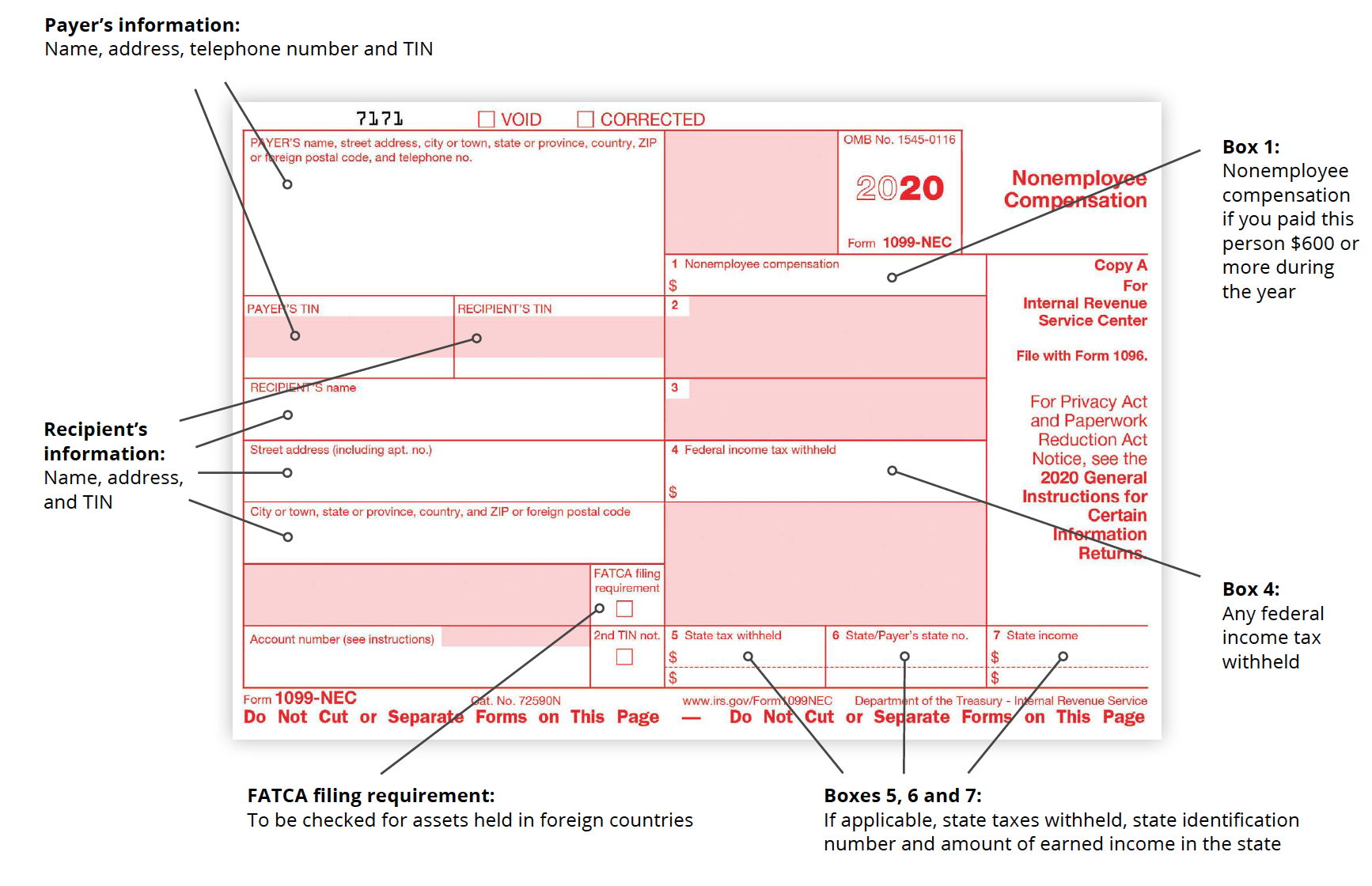
Completing the 1099-NEC form accurately is essential for compliance. The form requires specific information, including the payer's and payee's details, the amount paid, and the correct tax year. Ensuring all fields are filled out correctly helps avoid issues with the IRS.
For instance, businesses should double-check the Tax Identification Numbers (TINs) of their contractors and ensure that the payment amounts are correctly reported. Utilizing e-filing services, such as those offered by WageFiling, can simplify this process and reduce the likelihood of errors.
Common Mistakes to Avoid When Filing the 1099-NEC
Many businesses make common mistakes when filing the 1099-NEC, which can lead to complications with the IRS. These include incorrect TINs, failure to file on time, and misunderstanding the thresholds for reporting payments. Awareness of these pitfalls can save businesses time and money.
For example, submitting the form without verifying the contractor’s TIN can result in penalties. Additionally, businesses should be aware of the deadlines for filing both paper and electronic submissions to avoid late fees and ensure timely processing.