
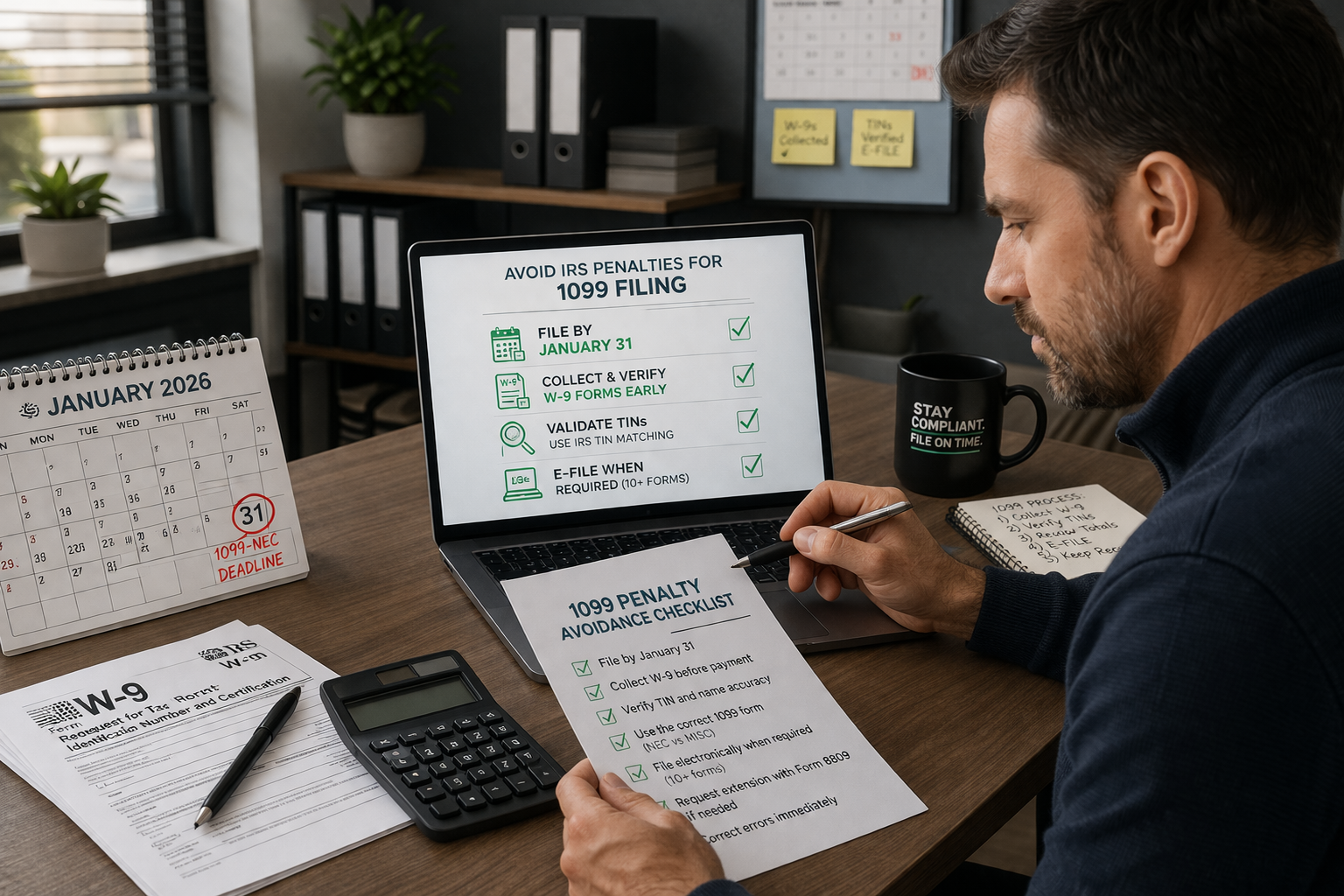
Filing 1099 forms is a critical part of running a business that works with contractors, freelancers, or vendors. But even small mistakes, like incorrect taxpayer information or missed deadlines, can lead to costly IRS penalties.
Key Takeaway: The best way to avoid IRS penalties when filing 1099 forms is to start early, verify contractor information using tools like TIN matching, and follow a clear, repeatable filing process.
The good news is that most penalties are preventable. When you build a simple system and stay consistent throughout the year, you can dramatically reduce your risk of IRS notices, corrections, and unnecessary costs.
Why Do Businesses Get Penalized for 1099 Filing?
The IRS issues penalties when businesses fail to meet reporting requirements accurately and on time. These penalties are more common than many business owners realize, especially during busy tax seasons.
Common reasons include:
- Filing 1099 forms after the deadline
- Reporting incorrect taxpayer identification numbers (TINs)
- Using the wrong form type
- Failing to file electronically when required
- Not issuing forms to recipients
Even one mistake can trigger a penalty, and when multiple forms are involved, those penalties can quickly add up.
You can review general IRS penalty guidelines here:
https://www.irs.gov/payments/penalties
What Are the Most Common 1099 Filing Mistakes?
Understanding where businesses go wrong is one of the fastest ways to improve your process and avoid penalties.
Incorrect or Missing TINs
If a contractor’s TIN does not match IRS records, your filing may be flagged or rejected.
Waiting Until the Last Minute
Rushed filings often lead to missing information or avoidable errors.
Not Collecting W-9 Forms Early
Without a completed W-9, you risk using incorrect or incomplete data.
Filing the Wrong Form
Using a 1099-MISC instead of a 1099-NEC, or vice versa, can create reporting issues.
Skipping Required E-Filing
Businesses filing 10 or more forms are generally required to file electronically.
When Should You Start Preparing Your 1099 Forms?
One of the biggest mistakes businesses make is waiting until January to begin preparing their 1099 filings.
Instead, preparation should start much earlier.
A better timeline looks like this:
- At onboarding: Collect W-9 forms before issuing payments
- Throughout the year: Track contractor payments accurately
- End of year: Review totals and confirm contractor details
- Early January: Prepare and verify forms before submission
Starting early gives you time to fix errors, request missing information, and avoid last-minute stress.
How Does TIN Matching Help Prevent IRS Penalties?
One of the most effective ways to avoid penalties is to verify contractor information before you file.
The IRS provides a TIN matching system that allows businesses to confirm whether a contractor’s name and TIN match official records. You can learn more directly from the IRS here:
https://www.irs.gov/tax-professionals/taxpayer-identification-number-tin-matching
Why TIN Matching Matters
- Reduces rejected or flagged filings
- Helps prevent IRS notices
- Ensures data accuracy before submission
- Saves time on corrections
How TIN Matching Works Step-by-Step
- Register for IRS e-Services
- Enter contractor name and TIN from the W-9
- Receive match confirmation
- Correct mismatches immediately
- Keep records of verification
Incorporating this step into your workflow can significantly reduce compliance risks.
What Is the Step-by-Step Process to Avoid 1099 Penalties?
Creating a repeatable system is the most reliable way to stay compliant year after year.
Step 1: Collect W-9 Forms Early
Always request a completed W-9 before issuing payments.
Step 2: Verify Information
Use tools like TIN matching to confirm accuracy.
Step 3: Track Payments
Maintain accurate records of contractor payments throughout the year.
Step 4: Use the Correct Form
- 1099-NEC for nonemployee compensation
- 1099-MISC for other payments
Step 5: File on Time
Most 1099-NEC forms are due January 31.
Step 6: File Electronically
Required for businesses filing multiple forms and helps reduce errors.
Step 7: Review Before Submission
Double-check all data before filing.
What Are the IRS Penalties for Incorrect 1099 Filing?
Penalties vary depending on how late the forms are filed and the severity of the error.
Potential consequences include:
- Fines per incorrect or late form
- Increased penalties for ongoing delays
- Higher penalties for intentional disregard
- Additional time spent correcting filings
How Much Can 1099 Penalties Cost Your Business?
Because penalties are assessed per form, they can grow quickly.
For example:
- 10 incorrect forms can result in 10 separate penalties
- 50 late filings can significantly increase total costs
This is why prevention is far more cost-effective than correction.
What Happens If You Receive an IRS Notice After Filing?
Even with a strong process, issues can still arise. If you receive an IRS notice related to your 1099 filings, it is important to act quickly.
Common reasons for notices include:
- Mismatched taxpayer information
- Underreported income discrepancies
- Filing inconsistencies
If you receive a notice:
- Review it carefully
- Compare it to your filed forms
- Submit corrections as soon as possible
- Keep documentation of all updates
You can learn more about responding to IRS notices here:
https://www.wagefiling.com/irs-cp2000-notice-how-to-respond/
How Can You Build a Better 1099 Filing System?
The most successful businesses treat 1099 filing as a year-round process, not a last-minute task.
To improve your system:
- Standardize contractor onboarding
- Store W-9 forms in a central location
- Use software to track payments
- Set internal deadlines before IRS deadlines
- Perform a yearly review before filing
Consistency and organization are key to avoiding penalties.
Frequently Asked Questions
How do I avoid penalties for filing 1099 forms late?
Start early, track deadlines, and file electronically when required. Setting internal deadlines before January 31 helps prevent delays.
What happens if I file a 1099 with incorrect information?
You may need to submit a corrected form, and penalties may apply depending on timing and severity.
Is TIN matching required for 1099 filing?
TIN matching is not required, but it is highly recommended to reduce errors and prevent IRS notices.
Conclusion
Avoiding IRS penalties when filing 1099 forms comes down to preparation, accuracy, and consistency. When you collect accurate information early, verify it before filing, and follow a structured process, you eliminate most of the common risks.
With the right system in place, you can stay compliant, avoid unnecessary costs, and approach tax season with confidence instead of stress.
Disclaimer
WageFiling is not a CPA firm and does not represent the IRS. This content is for informational purposes only and should not be considered tax or legal advice.