
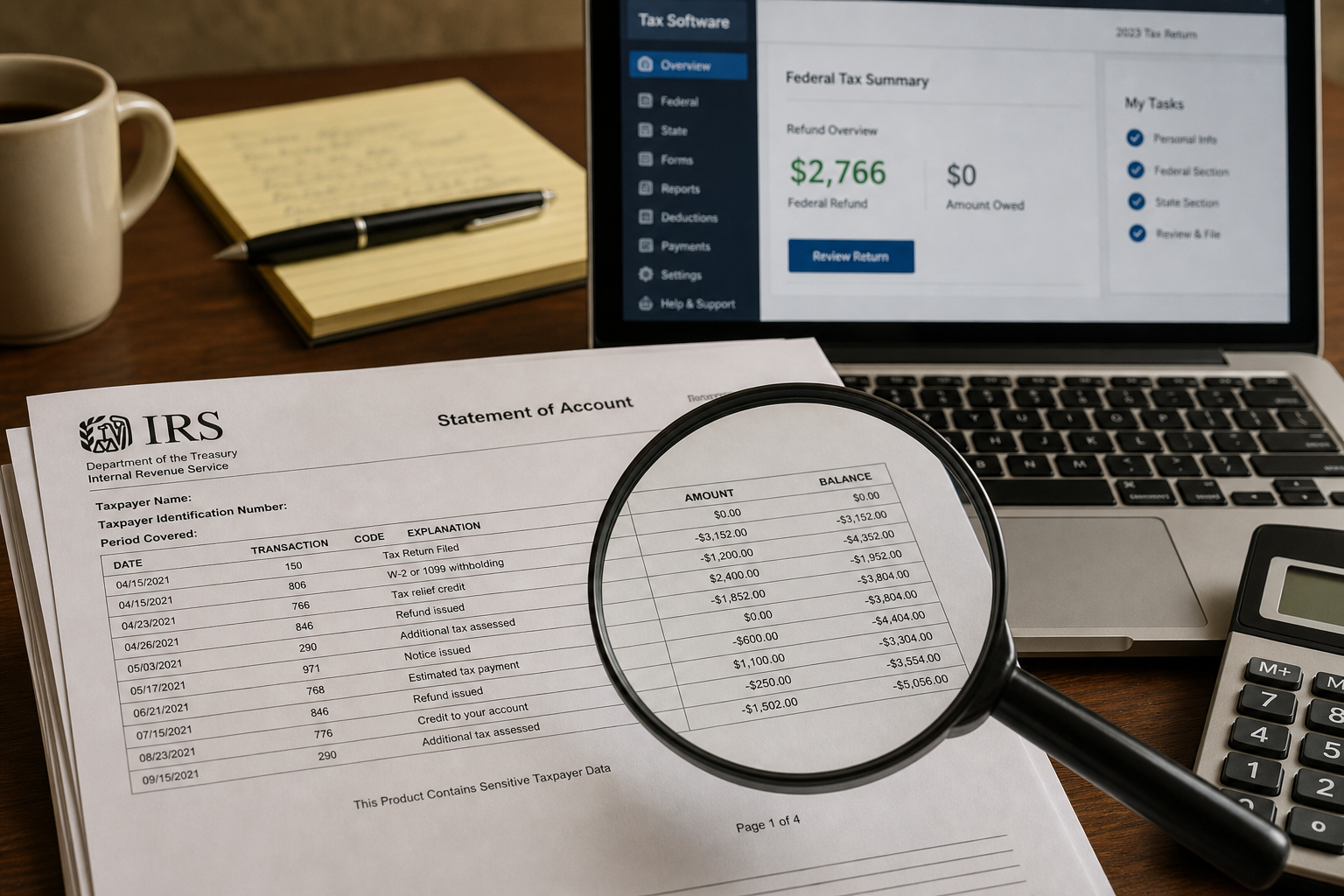
The IRS Automated Underreporter (AUR) program is a computer-driven system that compares the income reported on your tax return with the income reported to the IRS by third parties, such as employers and businesses that file W-2s and 1099 forms. When the system detects a discrepancy, it generates a notice (typically a CP2000) asking you to explain the difference or pay additional tax. The AUR program does not only affect individuals. Businesses that file inaccurate 1099s or W-2s can trigger AUR notices for their contractors and employees.
Key Takeaway: The AUR program matches the information on 1099 and W-2 forms against tax returns. Filing accurate, timely information returns is the best way to prevent your business and its payees from receiving AUR-related notices.
What It Is
The Automated Underreporter program is part of the IRS’s broader effort to close the tax gap, which is the difference between taxes owed and taxes paid. The AUR system uses automated document matching to identify taxpayers who may have underreported their income.
Here is how it works:
1. Businesses file information returns (1099s, W-2s) with the IRS, reporting payments made to individuals and other businesses.
2. The AUR system compares these filed returns against the income reported on the recipients’ individual and business tax returns.
3. When the system finds income reported on a 1099 or W-2 that does not appear on the corresponding tax return, it flags the discrepancy.
4. The IRS sends a notice (usually a CP2000, CP2501, or CP3219A) to the taxpayer asking them to explain the difference.
The AUR program is not an audit. It is an automated matching process. However, it can lead to additional tax assessments, interest, and penalties if the discrepancy is not resolved.
The IRS processes millions of AUR cases each year. According to the IRS Internal Revenue Manual, the AUR program is one of the largest compliance programs in terms of case volume and revenue generated.
Who It Applies To
The AUR program primarily affects individual taxpayers whose reported income does not match information returns filed on their behalf. However, businesses play a direct role in the process.
Businesses that file 1099s and W-2s. If your business files an inaccurate 1099 or W-2, the incorrect information enters the AUR system. This can trigger a notice for the recipient, even if they reported their income correctly on their tax return.
Independent contractors and freelancers. Contractors who receive 1099-NEC forms are common subjects of AUR matching. If a contractor fails to report all 1099 income, the AUR system will flag the shortfall.
Small business owners who receive 1099s. If your business receives 1099 forms from clients (for example, for services rendered), the income on those forms must match what you report on your business tax return.
Employers. W-2 wage data is also matched through the AUR system. Incorrect wage reporting can create mismatches for your employees.
Requirements
Understanding what the AUR program requires helps businesses stay compliant and avoid creating problems for their contractors and employees.
File accurate information returns. The most important requirement is accuracy. Make sure every 1099 and W-2 you file contains the correct recipient name, TIN, and payment amount. Errors in any of these fields can cause mismatches.
File on time. Late filings can create timing issues where the AUR system generates a notice before it receives your corrected or late information return.
Use correct form types. Reporting nonemployee compensation on a 1099-MISC instead of a 1099-NEC, or vice versa, can confuse the matching process and trigger false discrepancies.
Verify TINs before filing. Use the IRS TIN Matching Program to confirm that the names and TINs on your 1099s match IRS records. Mismatched TINs are a common trigger for AUR notices and B-notices.
Respond to IRS notices promptly. If you or your payee receives an AUR-related notice, respond within the timeframe stated on the notice (usually 30 days). Ignoring the notice can lead to automatic adjustments, additional tax, and penalties.
Common Mistakes
Several common errors by businesses contribute to AUR discrepancies.
Filing incorrect amounts. Overstating or understating payment amounts on 1099 forms creates a mismatch between what the IRS expects and what the recipient reports.
Transposing TIN digits. A single wrong digit in a Social Security number or EIN can assign the reported income to the wrong taxpayer. This creates a notice for someone who did not receive the payment and a missing income record for the person who did.
Filing duplicate 1099s. Accidentally filing the same 1099 twice doubles the reported income in the AUR system. The recipient then appears to have underreported by 50%.
Not filing corrections. If you discover an error on a filed 1099, you must file a corrected return. Leaving the error uncorrected means the AUR system will use the wrong data. Learn more about how to handle a filed incorrect 1099.
Ignoring B-notices. If the IRS sends your business a B-notice (indicating a TIN/name mismatch), you must follow up with the payee to obtain the correct information and file a corrected return.
Best Practices
Protect your business and your payees by following these practices.
Verify all information before filing. Compare every 1099 and W-2 against your accounting records before submission. Check names, TINs, amounts, and form types.
Use TIN matching. The IRS TIN Matching Program is free and can verify up to 25 TINs per session online (or bulk matching for larger volumes). Use it before filing to catch mismatches.
File electronically. E-filing reduces transcription errors and provides confirmation of receipt. WageFiling and similar platforms validate your data before submission, catching errors early.
File corrections immediately. If you discover an error after filing, submit a corrected 1099 as soon as possible. The AUR system uses the most recently filed version, so a timely correction can prevent a false notice.
Educate your contractors. Let your contractors know that the income you report on their 1099 must match what they report on their tax return. This simple communication can prevent AUR issues on both sides.
Respond quickly to notices. If you receive an AUR-related notice about a 1099 your business filed, review the original return and determine whether a correction is needed. Respond within the deadline to avoid automatic adjustments.
How WageFiling Helps
WageFiling helps businesses file accurate 1099s and W-2s, which is the most effective way to prevent AUR issues.
With WageFiling, you can:
- Enter payment data into a guided form that validates entries before filing.
- Use built-in TIN verification to check names and numbers before submission.
- E-file directly with the IRS, reducing transcription errors.
- File corrections quickly if you discover an error after the original submission.
- Maintain organized records of all filed returns for reference if an AUR notice is received.
By filing accurate information returns through WageFiling, you reduce the risk of triggering AUR notices for your contractors, vendors, and employees.
Conclusion
The IRS Automated Underreporter program matches the income on 1099s and W-2s against tax returns to identify discrepancies. Businesses that file inaccurate or late information returns can unintentionally trigger AUR notices for their payees. The best prevention is filing accurate, timely returns with verified TINs. Use electronic filing and TIN matching to reduce errors, and file corrections immediately if you discover a mistake.
Frequently Asked Questions
Is an AUR notice the same as an IRS audit?
No. An AUR notice is an automated document matching result, not a formal audit. The IRS system compares information returns (1099s and W-2s) against tax returns and generates a notice when it finds a discrepancy. You can usually resolve an AUR notice by responding with documentation. A formal audit involves a deeper review of your entire tax return or specific items.
What should I do if my contractor receives an AUR notice because of my 1099?
Review the 1099 you filed for that contractor. If the information is correct, let the contractor know they need to verify their tax return. If your 1099 contained an error, file a corrected 1099 with the IRS immediately and notify the contractor so they can respond to the notice with accurate information.
Can the AUR program assess penalties against my business?
The AUR program primarily generates notices for the recipients of 1099s and W-2s. However, if the IRS determines that your business filed incorrect information returns, you may face separate penalties under the information return penalty provisions. These penalties range from $60 to $330 per incorrect return, depending on when you correct the error.
Disclaimer: This article is for informational purposes only and should not be considered tax, legal, or accounting advice. Consult a qualified tax professional regarding your specific situation.