
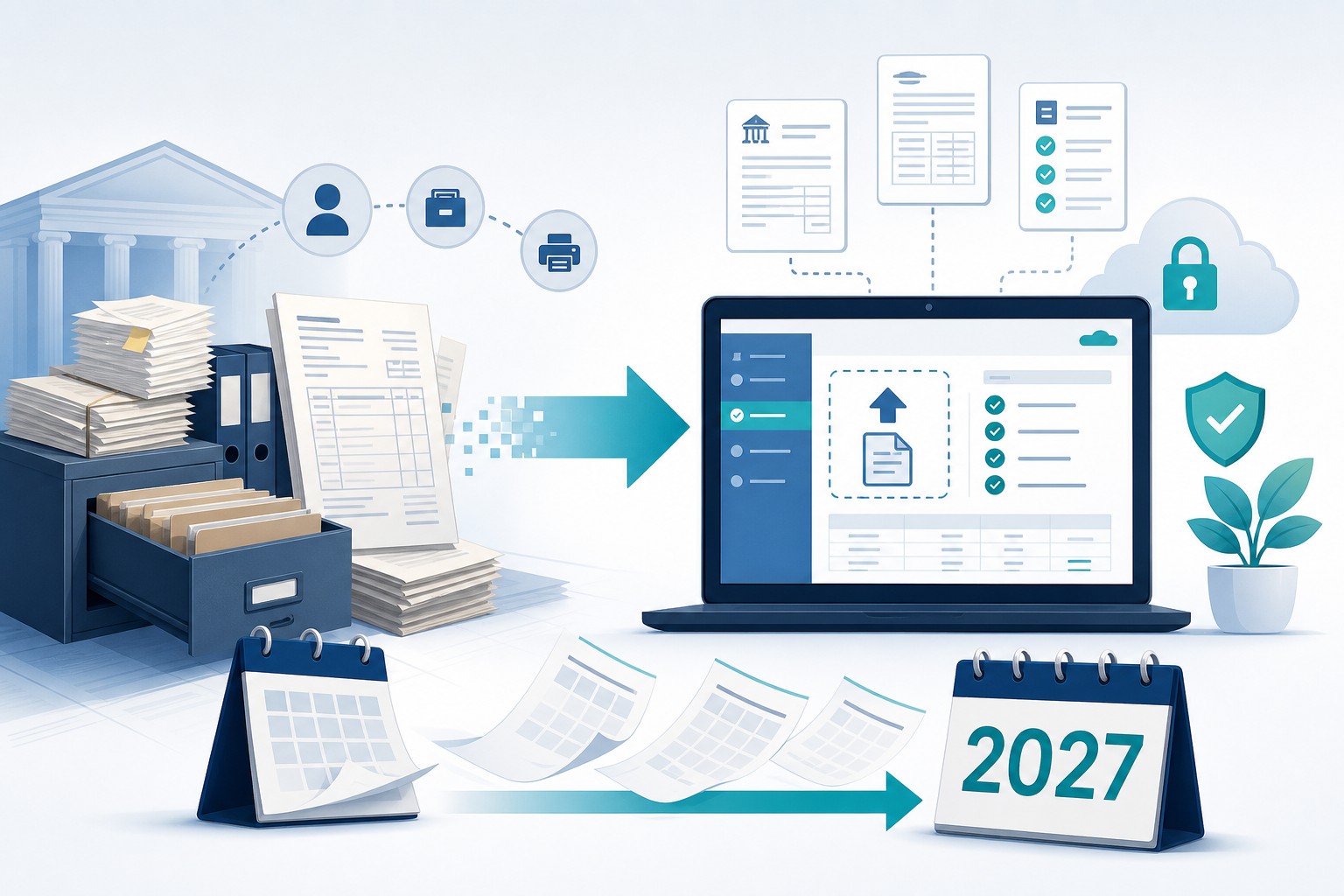
The IRS is shutting down its FIRE system for good after November 19, 2026, and every 1099 filer must move to the new IRIS platform before the 2027 filing season opens. W-2 filers are not directly affected, since W-2s go through the Social Security Administration’s own system, but many businesses file both forms together and need to plan for the change now.
Key Takeaway: The IRS will retire the FIRE system after November 19, 2026, so any business that files 1099 forms electronically must set up an IRIS account and switch platforms before the 2027 season. W-2 filers keep using the SSA’s system, but should still plan ahead if they file both form types.
What It Is
FIRE stands for Filing Information Returns Electronically. For decades, it has been the IRS’s main system for businesses that submit 1099s and other information returns online. The IRS built IRIS, the Information Returns Intake System, to replace it with a modern, more secure platform.
This transition has been underway since 2023, but the final cutover happens soon. Starting July 21, 2026, the IRS will stop accepting new Transmitter Control Code applications for FIRE. After that, FIRE will run in a limited, read-only mode through the rest of the year. The system goes dark for good on November 19, 2026, at 3:00 p.m. Eastern time. Starting with tax year 2026 returns filed during the 2027 season, IRIS becomes the only place to file 1099s, corrections, and other information returns that used to go through FIRE.
W-2 forms never ran through FIRE in the first place. Employers file those directly with the Social Security Administration through its Business Services Online portal, and that process stays the same. Still, businesses that file both W-2s and 1099s should treat this as a good moment to review their whole filing setup.
Who It Applies To
This change touches any business, accountant, or payroll provider that currently files 1099-NEC, 1099-MISC, 1099-INT, 1099-DIV, 1099-K, or other information returns through FIRE. It also applies to software vendors and transmitters who file on behalf of clients.
Small businesses that file only a handful of 1099s each year feel this shift too. Even if a company files just five or ten forms, it still needs an active IRIS account to file electronically after the FIRE shutdown. Businesses that mail paper 1099s instead of filing electronically are not required to switch, but paper filing has its own limits. The IRS requires electronic filing once a business submits ten or more information returns total in a calendar year, counting all form types combined.
Foreign filers without a U.S. Employer Identification Number face extra uncertainty right now. IRIS currently requires an EIN, and the IRS has said it is still developing a process for foreign entities that lack one. Businesses in that position should watch for updates rather than assume last year’s process will carry over.
Requirements
Getting ready for IRIS takes a few concrete steps, and starting early avoids a last-minute scramble in January 2027.
First, apply for an IRIS Transmitter Control Code, often called a TCC. This code identifies your business or software within the system and takes the place of the old FIRE TCC. The application happens online through the IRS’s e-Services platform, and approval can take time, so businesses should not wait until the fall of 2026 to start.
Second, decide how you will actually file. IRIS offers two paths, detailed on the IRS’s e-file information returns with IRIS page. The IRIS Taxpayer Portal lets a business type in information directly or upload a CSV file, and it works well for smaller filers who handle a modest number of forms. The Application to Application channel, or A2A, suits software companies and high-volume filers who want systems talking directly to the IRS through an API.
Third, review your existing FIRE TCC and any automated processes tied to it. If your accounting software or payroll provider files 1099s on your behalf, ask them directly whether they have already moved to IRIS or still rely on FIRE. Many providers are updating their systems now, and confirming this early prevents a filing gap next season.
Finally, keep an eye on IRS guidance about prior-year corrections. The IRS has said corrections to returns originally filed through FIRE will need special handling once FIRE goes offline, and it is still finalizing that process.
Common Mistakes
Many businesses assume the switch will happen automatically, but it will not. A business must actively apply for an IRIS TCC. Nobody transfers an old FIRE TCC over on your behalf.
Some filers wait too long to apply, then discover the approval process takes longer than expected right as deadlines approach. Others assume this change affects W-2 forms as well, then spend time updating a process that was never part of FIRE to begin with. A third common error involves foreign filers or entities without an EIN who assume they can keep using FIRE past the deadline simply because IRIS does not yet support their situation.
Businesses also sometimes overlook the difference between filing electronically and filing on paper. A company that has always filed on paper because it stays under the electronic filing threshold does not need an IRIS account. But once total information returns hit ten or more in a year, electronic filing through IRIS becomes mandatory, and paper filing is no longer an option.
Best Practices
Start the IRIS TCC application well before the fall of 2026. Applications go through a review process, and businesses that wait until the last weeks before the FIRE shutdown risk missing the January 31, 2027, deadline for sending 1099s to recipients.
Test the new system before it matters. IRIS runs an Assurance Testing System year-round, so businesses and software providers can run practice transmissions and catch formatting problems before live filing season starts.
Talk to your accountant or payroll provider now, not later. If a third party currently files your 1099s through FIRE, confirm their transition timeline in writing and ask what you need to do on your end, if anything.
Keep W-2 filing separate in your planning. W-2s go through the SSA rather than FIRE or IRIS, so that process stays unaffected. Still, use this transition as a natural checkpoint to confirm your SSA account details and login credentials are current too.
Sign up for IRIS QuickAlerts on IRS.gov. The IRS sends timely updates about system changes, maintenance windows, and working group meetings through this list, and it is the fastest way to hear about changes before they catch you off guard.
How WageFiling Helps
WageFiling already builds its filing process around modern, secure e-filing, so clients do not need to manage a FIRE or IRIS account themselves. The platform files 1099s and W-2s directly and handles the technical filing steps behind the scenes. It also tracks IRS system changes like this one, so your business does not have to chase every deadline and TCC application on its own.
Some businesses still rely on FIRE through their own software, or through a provider that has not confirmed its IRIS timeline. For those businesses, this transition is a good reason to evaluate a filing service built for the way the IRS operates today. If you are weighing your options, our guide on how to choose the best 1099 filing software for your small business walks through what to look for. WageFiling supports both 1099 and W-2 filing in one place, which simplifies the exact kind of dual-track situation this transition creates.
For more on how this shift plays out for high-volume filers, 1099Express has put together a helpful overview: FIRE to IRIS: What the IRS Transition Means for You. WageFiling, by contrast, is built with smaller filers in mind, so if your business files under about 40 forms a year, a straightforward, no-extra-software e-filing workflow tends to deliver the most value for the cost.
Conclusion
The FIRE-to-IRIS switch is one of the biggest changes to information return filing in years, and it lands right as the 2027 season opens. Businesses that file 1099s electronically need an IRIS TCC in place well before the November 19, 2026 shutdown. W-2 filers can stick with the SSA’s existing system, but should not ignore the broader shift if they file both form types. Planning now, rather than in January, keeps your filing season calm instead of chaotic.
Frequently Asked Questions
When does the IRS shut down the FIRE system for good?
The IRS will accept information returns through FIRE only until November 19, 2026, at 3:00 p.m. Eastern time. After that date, FIRE will no longer accept submissions, and businesses must use IRIS starting with the 2027 filing season.
Do W-2 filers need to switch to IRIS?
No. W-2 forms have always gone through the Social Security Administration’s Business Services Online system, not FIRE. This transition only affects 1099s and other information returns that used FIRE, though businesses filing both form types should still plan around it.
How do I get an IRIS Transmitter Control Code?
You apply for an IRIS TCC through the IRS’s online application process. The application replaces your old FIRE TCC and should be submitted well before the fall of 2026 to avoid delays heading into the 2027 filing season.
This article is for general informational purposes only and does not constitute legal, tax, or accounting advice. Filing requirements can vary based on your specific situation, and IRS guidance may change. Please consult a qualified tax professional or attorney for advice tailored to your business.